Hb & anemia clinical overview
Hemoglobin
Hemoglobin (Hb) is arguably the most important component in our blood, and is responsible for transporting oxygen from the lungs to the rest of our body. It is composed of a protein, called globin, and an iron containing compound called heme.
The heme group, along with its iron, is responsible for binding oxygen in the lungs and delivering it to other tissues, and it is also the reason that our blood is red. Hemoglobin is also important for transporting carbon dioxide (CO2) from the tissues to the lungs, where it is expelled from the body during exhalation.
Hemoglobin level is an important clinical parameter for assessing anemia both in chronic and acute conditions. Hemoglobin concentration measurement is among the most commonly performed blood tests. Results are usually reported in g/dl. Normal levels are:
• Men: 13.5 to 16.5 g/dl
• Women: 12.to 15g/dl
• Children: 11 to 16 g/dl
• Pregnant women: 11 to 12 g/dl
If Hb concentration falls below normal, this is called anemia.
Anemia:
Anemia is a condition in which the hemoglobin concentration in the blood is below a defined level, resulting in a reduced oxygen-carrying capacity of red blood cells. About half of all cases of anemia can be attributed to iron deficiency; other common causes include trauma, infections, such as malaria and schistosomiasis, and genetic factors, which result in thalassaemias and sickle-cell disease. In its severe form, anemia is associated with fatigue, weakness, dizziness and drowsiness, and may lead to death.
In the ICU and ER, anemia is a common problem1,5. The vast majority of patients are anemic on admission to the ICU. There are various causes for anemia in critically ill patients. Anemia may result from acute blood loss after trauma, GI hemorrhage, or surgery. In other cases, anemia may result from chemotherapy, or chronic medical conditions, such as renal diseases. Another problem, particularly in the ICU, is iatrogenic anemia (anemia caused by frequent blood tests). Some estimates have suggested that nearly 60 ml blood are drawn each day from ICU patients.
Testing for anemia - current procedure:
Hb levels are the primary indicator of anemia. In intensive care units (ICUs), operating rooms (ORs), recovery rooms and emergency rooms (ERs), Hb levels are evaluated in order to determine the need for particular treatments, such as blood transfusion or drugs stimulating blood production by the body4, in critically ill patients (such as people suffering from end stage renal disease or trauma patients).
Currently, blood is drawn from a vein, usually from the inside of the elbow or the back of the hand, or else by pricking a finger. The puncture site is first cleaned with antiseptic, and blood flow through the vein is restricted by a tourniquet. This causes the veins to fill with blood. A needle is inserted into the vein, and the blood is collected in an air-tight vial or a syringe. The vial is labeled, transferred to the lab and Hb levels are determined by photometric methods and sent back to the department.
Problems and caveats:
1. Current procedures are painful, and expose patients and practitioners to risk of infection.
2. Current procedures involve several steps and are relatively slow. This may prove crucial in emergency situations.
3. Current procedures deliver spot readings which may result in a delay in diagnosis
4. Current procedures are costly and increase health personnel workload
5. Current procedures may result in iatrogenic anemia (anemia caused by the blood tests themselves)1,3. Especially in the ICU and ER, relatively frequent Hb measurements may be critical, since several recent studies indicate that while severe anemia increases morbidity and mortality, blood transfusion may also be harmful1,2.
The NMB-200MP Solution:
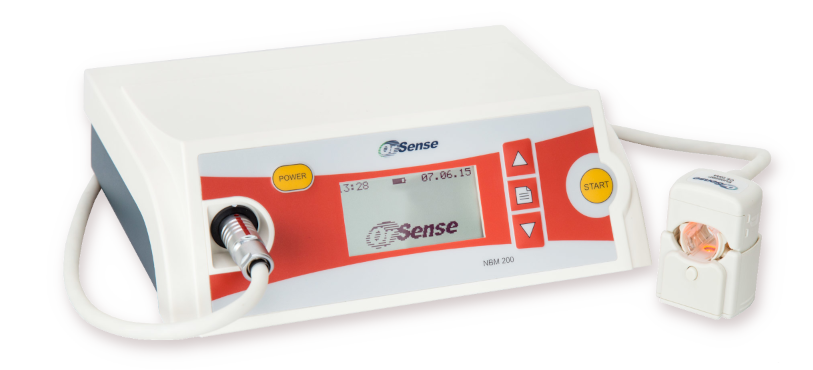
OrSense offers a unique, breakthrough noninvasive and instantaneous solution for continuous and spot Hb measurements. The OrSense multi-parameter NBM-200MP sensor is a non-invasive solution for on-line, continuous and spot Hb measurements combined with accurate oximetry measurements. It is useful for hematocrit/hemoglobin determination, hidden blood loss monitoring and for anemia screening. It is well suited to use in a variety of clinical environments, including perioperative and critical care, emergency medicine, blood donation facilities, women’s health and the primary care physician’s office. OrSense's systems received the European CE Mark and the technology was validated on over 4,000 patients and donors at over 20 sites in the U.S. and Europe. It exhibits accuracy similar to invasive point of care solutions while demonstrating clear superiority in safety, ease of use and reduced cost.
1. Dasta J. et al. (2008) Current management of anemia in critically ill patients: analysis of a database of 139 hospitals. American Journal of Therapeutics. 2008 15:423-30
2. Leal-Noval SR et al. (2008) Optimal hemoglobin concentration in patients with subarachnoid hemorrhage, acute ischemic stroke and traumatic brain injury. Current Opinion in Critical Care. 14:156-62
3. Andrews T. et al. (1999) Blood gas analysis: a study of blood loss in intensive care. Journal of Advanced Nursing 30:851-7
4. Brophy et al. (2008) US multicenter, retrospective, observational study of erythropoiesis-stimulating agent utilization in anemic, critically ill patients admitted to the intensive care unit. Clinical Therapeutics 30:2324-34.
5. Andrew F. et al. (2005) Transfusion Practice in the ICU. Chest 2005;127;702-705