Diabetes clinical overview

Overview:

Diabetes is a chronic disease in which blood glucose levels are too high. Glucose is a sugar derived from food, and is the main energy source for our cells. The presence of the hormone Insulin is necessary in order to get glucose into the cells. Insulin is produced in the pancreas, in particular cells called beta cells. In Type 1 diabetes, the pancreas does not produce insulin. In Type 2 diabetes, the more common type, either the pancreas does not produce enough insulin, or the cells can not respond to it efficiently. Without enough insulin, the glucose stays in the blood, resulting in elevated blood glucose levels (hyperglycaemia).
Over time, having too much glucose in the blood can cause serious problems. It can damage the eyes, kidneys, and nerves. Diabetes can also cause heart disease, stroke and even lead to amputation of a limb.

Another form of diabetes, called gestational diabetes, may develop in pregnant women. Elevated blood glucose levels during the pregnancy may harm both the mother and the baby. Out of every 100 pregnant women in the United States, between three and eight get gestational diabetes. Gestational diabetes goes away after birth, but it does increase the mother's risk for having diabetes later.

Type 1 diabetes:

Type 1 diabetes (previously known as insulin-dependent diabetes) is an autoimmune disease characterized by destruction of the insulin-producing beta cells in the pancreas. Without daily administration of insulin, Type 1 diabetes is rapidly fatal. The disease is usually diagnosed before the age of 19, and was therefore also referred to as juvenile diabetes.
Although the initiation of the destructive autoimmune processes remains poorly understood, studies in twins have clearly established a major genetic element to type 1 diabetes. However, less than half of identical twins both develop the disease. Thus, it is considered that genetic elements form approximately 40% of disease susceptibility, and environmental factors also play a major role.

Symptoms include excessive excretion of urine (polyuria), thirst (polydipsia), constant hunger, weight loss, vision changes and fatigue. These symptoms may occur suddenly.
According to the World Health Organization (WHO), there are over 180 million people living with diabetes throughout the world, and this number is expected to double by 2030. In 2005, over 1 million people died from complications of diabetes.

Type 2 diabetes:


The most common form of diabetes is type 2 diabetes, accounting to 90-95% of all cases. This form of diabetes is most often associated with older age, obesity, family history of diabetes, previous history of gestational diabetes, physical inactivity, and certain ethnicities. About 80 percent of people with type 2 diabetes are overweight.

Type 2 diabetes is reaching epidemic proportions, and is increasingly being diagnosed in children and adolescents. In 2007, an estimated 8% of the USA population suffered from diabetes, and almost 11% of the population aged 20 years or older have diabetes.

When type 2 diabetes is diagnosed, insulin production is usually sufficient, but for some reason the body cannot use the insulin effectively, a condition called insulin resistance. After several years, insulin production decreases. Either way, the result is the same as for type 1 diabetes—glucose accumulates in the blood and is not available for energy production in the body's cells.

Unlike type 1 diabetes, the symptoms of type 2 diabetes develop gradually. Symptoms may include fatigue, frequent urination, increased thirst and hunger, weight loss, blurred vision, and slow healing of wounds or sores. Some people have no symptoms.

Gestational diabetes:

Some women develop gestational diabetes late in pregnancy. Although this form of diabetes usually disappears after the birth of the baby, women who have had gestational diabetes have a 40 to 60 percent chance of developing type 2 diabetes within 5 to 10 years. Maintaining a reasonable body weight and being physically active may help prevent development of the disease. Gestational diabetes is caused by the hormones of pregnancy or a shortage of insulin. Women with gestational diabetes may not experience any symptoms.

Consequences of diabetes:

Over time, diabetes can damage the heart, blood vessels, eyes, kidneys, and nerves. In fact, diabetes was the seventh leading cause of death in the USA in 2006. However, it is very likely underreported as a cause of death. Overall, the risk for death among people with diabetes is about twice that of people without diabetes of similar age.


• Diabetic retinopathy is an important cause of blindness, and results from damage to the small blood vessels in the retina. After 15 years of diabetes, approximately 2% of people become blind, and about 10% develop severe visual impairment.
• Diabetic neuropathy is damage to the peripheral nerves as a result of diabetes, and affects up to 50% of people with diabetes. Common symptoms are tingling, pain, numbness, or weakness in the feet and hands.
• Neuropathy in the feet along with sluggish blood flow due to elevated blood sugar levels increases the chance of foot ulcers and eventual limb amputation.
• Diabetes is among the leading causes of kidney failure. 10-20% of people with diabetes die of kidney failure.
• Diabetes increases the risk of heart disease and stroke. 50% of people with diabetes die of cardiovascular disease (primarily heart disease and stroke).

Management and Treatment:

• Many people with type 2 diabetes can control their blood glucose by following a healthy meal plan and exercise program, losing excess weight, and taking oral medication. Some people with type 2 diabetes may also need insulin to control their blood glucose.
• To survive, people with type 1 diabetes must have insulin delivered by injection or a pump.
• Among adults with diagnosed diabetes—type 1 or type 2—14 percent take insulin only, 13 percent take both insulin and oral medication, 57 percent take oral medication only, and 16 percent do not take either insulin or oral medication. Medications for each individual with diabetes will often change over the course of the disease.
• Many people with diabetes also need to take medications to control their cholesterol and blood pressure.
• Self-management education or training is a key step in improving health outcomes and quality of life. It focuses on self-care behaviors, such as healthy eating, being active, and monitoring blood glucose. It is a collaborative process in which diabetes educators help people with or at risk for diabetes gain the knowledge and problem-solving and coping skills needed to successfully self-manage the disease and its related conditions.

Currently, there is no cure for diabetes. However, the disease can be adequately managed by a healthy diet, physical activity, careful monitoring of blood glucose levels and the appropriate drugs. For type 1 diabetes, the basic medication is insulin, the amount of which must be balanced with food intake and daily activities through frequent blood glucose checking.
The goal of diabetes management is to keep levels of blood glucose, blood pressure, and cholesterol as close to the normal range as safely possible. A major study, the Diabetes Control and Complications Trial (DCCT), sponsored by the National Institute of Diabetes and Digestive and Kidney Diseases (NIDDK), showed that keeping blood glucose levels close to normal reduces the risk of developing major complications of diabetes.

Noninvasive monitoring of blood glucose levels

Due to the dire consequences of diabetes, blood glucose levels should be monitored rigorously. There is a dramatic increase in the incidence of diabetes in recent years, leading to large numbers of patients who require a simple, comfortable glucose measurement method in order to comply with the difficult self-monitoring regimen required to maintain their health. However, the usual invasive glucose measurement method, based on highly uncomfortable finger pricking, is not feasible for frequent implementation, calling for a non-invasive alternative. OrSense’s non-invasive blood glucose measurement technology is therefore poised to provide a dramatic improvement in the quality of care and quality of life for people with diabetes.

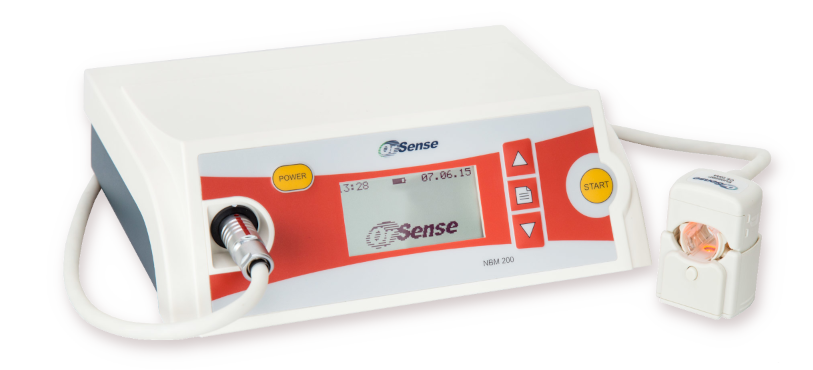
The NBM-200G is based on OrSense’s proprietary breakthrough technology that allows non-invasive measurement of analytes including glucose, hemoglobin, and oxygen saturation with very high sensitivity. The NBM-200G is operated by placing a ring-shaped probe around the patient's finger, which applies a gentle pressure to the finger, similar to that applied during non-invasive blood-pressure measurement and temporarily occludes the blood flow. During the occlusion, optical elements in the sensor perform a sensitive measurement of the light transmitted through the finger. This method, called Occlusion Spectroscopy, provides a quick, accurate and painless measurement of the patient's blood glucose. The method was tested on over 400 subjects, exhibiting comparable accuracy to invasive solutions, while providing superior ease of use and safety. In addition, the NBM-200G enables the identification of glucose trends and the detection of hypo- and hyperglycemia events and may also optimally answer the growing need for tight glycemic control in acute care settings, thereby reducing morbidity and mortality. The NBM-200G is currently in advanced stages of development.

Sources:
1. Endocrinology: An integrated approach. (2001) Nussey S.S. and Whitehead S.A., London, Taylor & Francis. http://www.ncbi.nlm.nih.gov/bookshelf/br.fcgi?book=endocrin
2. MedlinePlus. http://www.nlm.nih.gov/medlineplus/diabetes.html
3. The World Health Organization http://www.who.int/diabetes/facts/en/index.html
4. The NIH National Diabetes Information Clearinghouse http://diabetes.niddk.nih.gov/dm/pubs/statistics/

  
OrSense All rights reserved