Pulse Oximetry
Low Signal Oximetry:
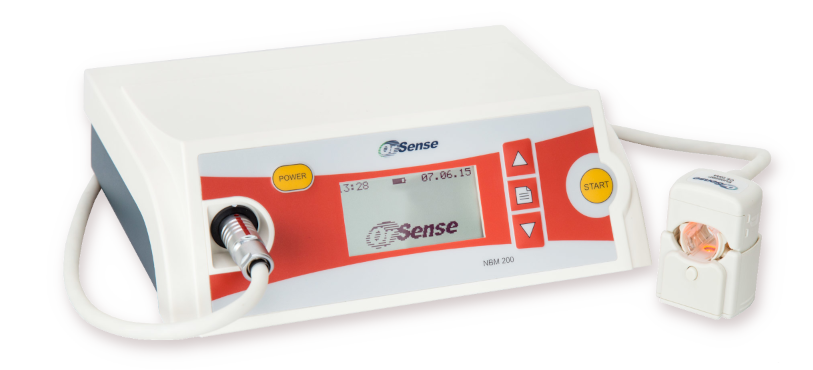
While pulse oximetry has become standard of care in the operating room, recovery room, and intensive care units, it has been known to give none or erroneous oxygen saturation readings in states of hypovolemia, hypothermia, vasoconstriction and during open heart surgery. OrSense's NBM-200MP system offers non-invasive, continuous accurate measurement of oxygen saturation in low and regular perfusion.
OrSense NBM200MP participated in two sets of clinical trials. The first was a multi center validation study performed on 20 healthy volunteers in VA Medical Center Milwaukee and Rabin Medical Center, Israel. During a desaturation (induced hypoxia) down to a level of 70%, OrSense's device was compared with standard reference. To allow low pulse signal, a temporary cessation of blood flow was induced by a blood pressure cuff. Performance of OrSense's oximetry device in low signal / low perfusion situation was compared to a high end pulse oximeter. Results are shown below:
The second clinical study was conducted on 20 admitted patients at the Rabin Medical Center – Medical ICU. The objective of this study was to establish NBM-200MP's superior performance in patients exhibiting low signal/ low perfusion. OrSense's NBM 200MP sensor was placed on patients' fingers for up to 24 hours where it continuously and non-invasively monitored oxygen saturation, hemoglobin [link to Hb clinical trials] and glucose [link to glucose clinical trials]
In the figure below a case study of a patient undergoing severe hypoxia is presented. In this case, OrSense's NBM-200MP performed in high correlation with a blood gas analyzer as reference while a high end pulse oximeter, commonly use in this site, failed to read during hypovolemia.